
Our Approach
Understanding the Patterns That Keep Us Stuck
Most of us develop ways of thinking, feeling, and responding that make sense given what we've experienced. Over time, however, those patterns can become so familiar that we stop noticing them — even when they are no longer helping us.
At Holistic Health Systems, we believe therapy is an opportunity to slow down, understand those patterns, and develop new ways of responding that better reflect who you are and what you want.
Rather than simply trying to eliminate symptoms, we work to understand what is underneath them and help you build a life that is more consistent with your values, relationships, and goals.

Therapy That Looks at The Whole Person
We believe mental health doesn't exist in isolation from the rest of your life. Your thoughts and emotions are connected to your body, relationships, environment, habits, and sense of connection to other people.
That's why we don't rely on a single method. Depending on what you're working through, our work together might include conversation-based approaches like cognitive behavioral therapy, relational life therapy, or a collaborative therapeutic relationship built through reflection and dialogue. It might also include approaches that work directly with the body and nervous system — such as EMDR, somatic therapy, or attachment- and trauma-informed methods — to address patterns that talking alone doesn't always reach.
We'll work with you to determine which approaches — or combination of approaches — are the best fit for what you're facing.


From Insight to Action
Understanding yourself is important, but insight alone doesn't always create change.
Therapy can help you recognize the difference between automatically reacting from an old pattern and responding in a way that reflects the person you want to be. We work toward developing greater flexibility — the ability to notice what is happening, make space for difficult experiences, and choose your next step deliberately, rather than on autopilot.
That might mean setting a boundary, approaching something you've been avoiding, changing a relationship pattern, reconnecting with your values, or learning to respond differently when stress takes over.

There is no single formula for meaningful change, and we don't believe therapy should be one-size-fits-all. We meet you where you are, work at a pace that allows for genuine exploration, and adapt our approach to what you need.
Our role isn't to tell you who you should become. It's to help you understand yourself more deeply, take ownership of your choices, and create the space to live in a way that feels true to who you are and what matters to you.
A Collaborative Process
Mental Health Is Bigger Than the Therapy Room
We also believe that counseling is one part of a larger system of wellness.
Connection, movement, meaningful relationships, community, and a sense of purpose can all play an important role in mental health. When appropriate, we may encourage clients to explore resources and activities outside of therapy that support these areas of their lives — from community groups and recreational activities to opportunities for movement and connection.
Our goal isn't to make therapy the center of your life. It's to help you build a life that makes therapy one of many supports working in your favor.
Our Team

Emily Sanfiel
Co-Founder and Licensed Mental Health Counselor
I know from experience that therapy works best when it doesn't feel clinical. My clients often tell me they don't want to feel like they're talking to someone who just nods and takes notes — they want to feel like they're working with someone who actually understands them and is invested in their progress. That's the kind of therapist I aim to be: warm and direct, with real care for the people I work with, and real expectations that we'll both put in the work it takes to get somewhere.
I specialize in trauma and relationships — the patterns, the attachment wounds, the ways our past quietly shapes how we connect with the people around us now. I work with adults and couples, and I care deeply about your results. Change happens in the room, but it really takes hold in the work we do together between sessions — that's where I see people actually shift. Not just feeling a little lighter by the end of the hour, but real change that shows up in how you live, and how you show up for the people who matter to you.
Alongside that, I bring real clinical depth. I've been practicing EMDR for four years and am currently completing certification in it, and I'm also trained in Internal Family Systems (IFS), the Gottman Method, somatic therapy, attachment-based therapy, CBT, and ACT — plus I draw on DBT skills and relational life therapy principles, especially with couples and clients working through relationship patterns. I also practice yoga myself, which shapes how I bring relaxation and grounding into our work together. I take a whole-person approach — mind, body, and relationships, treated as connected, not separate.
If any of this resonates, I'd love to talk. Reaching out is often the hardest part — I'm glad to make the rest of it easier.
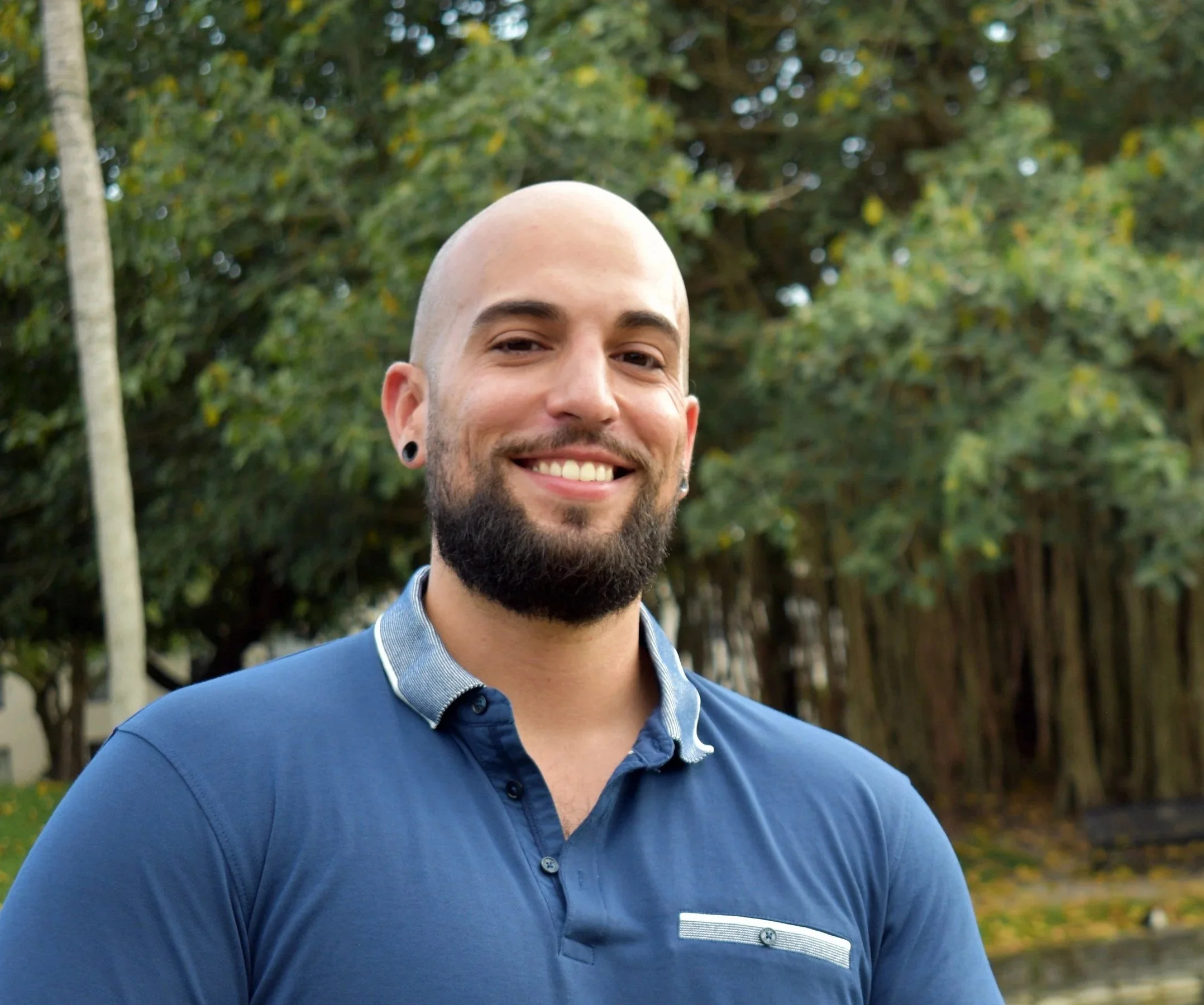
I work with adults experiencing anxiety, depression, relationship difficulties, and patterns that can feel difficult to change—such as overthinking, people-pleasing, emotional shutdown, and chronic unease. I help clients understand what drives these patterns and develop greater emotional regulation, using a trauma-informed, evidence-based approach that incorporates mindfulness and practical strategies for change.
A central part of my work is helping clients create more space between what they feel and how they respond. Together, we work to understand how stress and the nervous system can shape reactions, identify patterns that may no longer be serving them, and build more intentional ways of responding to emotions, relationships, and everyday challenges.
My goal is not simply to reduce symptoms, but to help clients develop greater internal stability and a more grounded, sustainable way of living—one that feels less driven by anxiety or automatic reactions and more aligned with their values. I strive to create a therapeutic space that feels steady, collaborative, and approachable, where meaningful progress can happen without feeling overwhelming.
Co-Founder and Licensed Mental Health Counselor
Patrick Sanfiel
Therapy FAQs
Starting therapy can come with a lot of questions. You may be wondering whether therapy is right for you, what your first session will be like, how long therapy takes, or whether a particular therapist will be a good fit.
Below are some of the questions we hear most often. If you don't see your question answered here, please reach out and we'll be happy to help.
Getting started
-
You don't need to be in crisis or have a specific diagnosis to benefit from therapy. People seek counseling for many different reasons, including anxiety, relationship difficulties, life transitions, grief, trauma, burnout, difficulty managing emotions, or simply feeling stuck in patterns they would like to change.
Sometimes you may not even know exactly what's wrong—you just know that something isn't working. That's enough of a reason to start a conversation.
-
The first session is primarily an opportunity for us to get to know you, understand what brought you to therapy, and begin identifying what you would like to change or better understand.
We'll also talk about your history and current circumstances as needed, discuss goals for therapy, and answer any questions you have about the process. You don't need to prepare a perfect explanation of what's wrong. We can figure that out together.
-
No. Therapy isn't only for people with a mental health diagnosis. You can seek therapy because you're struggling, feel stuck, want to understand yourself better, are navigating a difficult transition, or want support making meaningful changes in your life.
What Therapy Is Like
-
There isn't one script for therapy. Sessions generally involve talking about what's happening in your life, exploring thoughts, emotions, relationships, behaviors, and patterns, and working together toward your goals.
Depending on what you're working on, sessions may also include practical exercises, mindfulness, nervous-system regulation skills, psychoeducation, or other therapeutic techniques. Our approach is tailored to the individual rather than following a one-size-fits-all formula.
-
Our role isn't to make your decisions for you. Instead, we'll help you understand yourself, clarify what matters to you, consider your options, and recognize patterns that may be influencing your decisions.
We want therapy to help you become more capable and confident of making intentional decisions for yourself—not more dependent on your therapist to make them.
-
Not necessarily. Therapy should feel safe enough for honest exploration, but meaningful change can sometimes involve discomfort.
We may explore experiences, emotions, or patterns that are difficult to sit with. We try to approach that work thoughtfully and at a pace that allows you to remain engaged rather than overwhelmed.
Our approach
-
To us, holistic means understanding mental health as part of a larger system.
Your thoughts and emotions are connected to your body, relationships, environment, habits, physical activity, and connection to other people. While talk therapy is at the center of what we do, we may also consider factors such as nervous-system regulation, mindfulness, movement, social connection, and community support.
Therapy is one part of a larger picture of wellness.
-
Our therapists draw from a variety of therapeutic approaches depending on the person and the concerns they're bringing to therapy. These may include Cognitive Behavioral Therapy (CBT), mindfulness-based approaches, attachment-informed therapy, Internal Family Systems (IFS), trauma-informed approaches, EMDR, psychodynamic therapy, and Acceptance and Commitment Therapy (ACT).
You don't need to know which approach you need before starting therapy. That's something we'll determine together.
-
When appropriate, yes. We believe mental health is supported by more than counseling alone.
Depending on your goals and circumstances, we may encourage you to explore community resources, activities, groups, movement, social connection, or other supports that can complement the work you're doing in therapy.
Practical Questions
-
We offer both in-person and telehealth therapy to clients throughout the state of Florida.
-
Insurance coverage varies by therapist. As a practice, we currently work with several major insurance plans, including Cigna, Aetna, UnitedHealthcare, Optum, Oscar, AvMed, Meritain, Florida Blue and Blue Cross Blue Shield of Florida.
Because coverage and benefits can vary depending on your specific plan and therapist, we recommend confirming your benefits with both your insurance provider and our office before beginning therapy.
-
Yes. We offer self-pay options, with rates varying by therapist.
We can also provide a superbill that you may submit to your insurance company for potential out-of-network reimbursement. Any reimbursement is determined by your insurance plan and is not guaranteed by Holistic Health Systems.
-
You can reach us by phone, email, or through the contact form on our website. Email is generally the best way to reach us and allows us to respond with information about availability and next steps.
-
We respond to inquiries within two business day.
If you contact us outside of business hours, over the weekend, or during a holiday, we'll respond on the next business day.
-
Cancellations or missed appointments with less than 24 hours' notice are subject to a $100 late cancellation fee.
This policy helps us respect both your therapist's time and the time of other people who may be waiting for an appointment. Providing as much notice as possible gives us an opportunity to offer your appointment time to someone else who needs it.